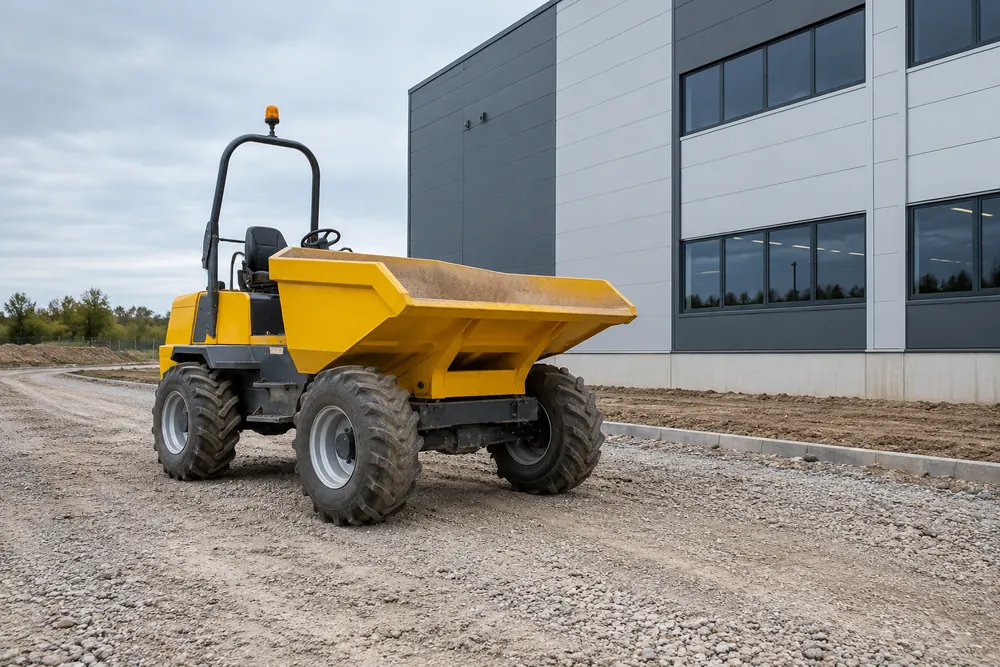
Equipment For The Task
A site dumper moves loose material between the dig, stockpile and tipping point. It is useful where repeated trips would otherwise hold up excavation, but the route needs as much thought as the carrying capacity.
Describe the material and the distance it needs to travel. Wet spoil, broken concrete and aggregate differ in weight and loading behaviour. Do not judge a safe load only by how full the skip looks.
We take commercial enquiries for compact and larger site dumpers, subject to availability and confirmed specification. Explain whether the receiving point is a stockpile, hopper or skip. Tipping height and direction may determine which arrangement can be used safely on your site.
Choosing The Specification
Payload must suit the task and the ground route. A larger dumper may reduce trips but need more turning room and a wider, stronger access route. Check dimensions, gradients and the space available at both ends of the journey.
Tipping arrangements have practical limits. A swivel skip may help where turning space is restricted, while a high-tip model needs a suitable receiving height and stable working position. Ask for the proposed machine’s operating limits rather than assuming all dumpers behave alike.
Coordinate the dumper with the excavator. Loading should take place in a controlled area with an agreed procedure and no pedestrians in the danger zone. The excavator bucket and dumper capacity need to be compatible with the planned loading method.
Safety And Site Responsibilities
The Provision and Use of Work Equipment Regulations 1998 (PUWER) apply to hired dumpers. HSE guidance calls for suitable selection, maintenance and trained drivers, alongside separation of pedestrians from vehicle movements.
Overturning and collisions are central dumper hazards. Assess slopes, edges, soft ground and tipping positions before work starts. Follow the instructions for rollover protection and restraints, and do not operate a machine with safety devices defeated or a load that blocks safe visibility.
Site traffic controls should cover reversing, crossing points and any interaction with delivery vehicles. Mark routes clearly and review them as the work progresses. Stop and reassess if rain, excavation or stored material changes the route or the stability of a tipping area.
Your Hire, Step By Step
Send the material description, intended payload, route details and tipping requirement with your dates and postcode. Include whether the dumper will work alongside an excavator and whether there are restricted gates or internal corners.
Check the quoted machine against the site route. Agree transport, fuel, hire hours and the process for reporting a defect. Confirm who will drive it and what familiarisation or site induction is needed before arrival.
At handover, inspect tyres or tracks, restraints, controls and the skip. Complete the supplier’s daily checks and keep the route clear. Record condition at the end of hire and follow the agreed off-hire procedure rather than assuming an unused machine has stopped accruing charges.
Equipment Rates And Transport Charges
Dumper hire costs depend on carrying class, tipping arrangement, duration and transport. Compact, tracked and high-tip machines can have different capabilities and charging structures, so compare the actual specification offered rather than the word dumper alone.
Ask how fuel, cleaning and damage are charged, particularly when handling sticky spoil. Clarify any usage limits and the notice needed for collection. If the excavation programme moves, contact the supplier before the booked period expires to agree an extension or a revised collection date.
Set Up The Material Route
Walk the material route before the hire starts, including the loading point and final discharge area. Check whether stored materials or another trade will narrow the route during the shift.
Agree how drivers and the loading team will communicate, and where the dumper can wait safely between trips. Include a suitable parking location in the site plan so the machine does not obstruct emergency access when work pauses.
Dumper Hire Questions
Which Dumper Capacity Should I Choose?
Dumper capacity should match material weight, access and the loading machine. A larger skip does not make an unsuitable route safe, and wet material can reach the rated payload before the skip looks full. Describe the material and route so the proposed machine can be checked against your planned working method.
Can A Dumper Tip Into A Skip?
Tipping into a skip needs a dumper with a suitable discharge height and a stable, level operating position. Confirm the receiving skip’s dimensions and placement before choosing a high-tip arrangement. The task must follow the machine instructions and site assessment, with people kept clear of the tipping and movement zones.